Shakespeare, claro. Invierno. Infierno. Cambiemos tan sólo una letra.
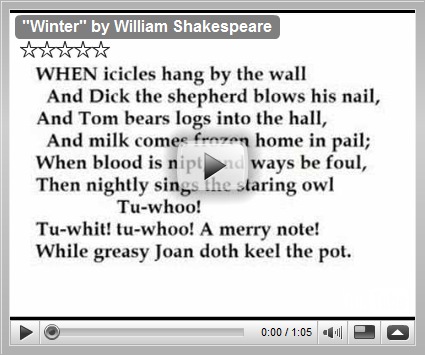


Esto no es nada nuevo, pero resulta siempre interesante. El hecho de que los dos hayan muerto el mismo día del mismo año llama la atención (23 de abril de 1616). No sé si Cervantes era Shakespeare, o si los dos fueran Francis Bacon, pero no hay dudas de que en esta fascinante teoría conspirativa hay material para una buena novela.
60
Like as the waves make towards the pebbled shore,
So do our minutes hasten to their end;
Each changing place with that which goes before,
In sequent toil all forwards do contend.
Nativity, once in the main of light,
Crawls to maturity, wherewith being crown’d,
Crooked elipses ’gainst his glory fight,
And Time that gave doth now his gift confound.
Time doth transfix the flourish set on youth
And delves the parallels in beauty’s brow,
Feeds on the rarities of nature’s truth,
And nothing stands but for his scythe to mow:
And yet to times in hope my verse shall stand,
Praising thy worth, despite his cruel hand.
No es con mis ojos que te amo porque ellos en ti miles de errores encuentran. Es mi corazón el que ama lo que mis ojos detestan. Tampoco le gustan a mis oídos tu tonada. Tu sabor ni tu olor me invitan a un banquete sensual. Ni mis cinco sentidos ni mis cinco conciencias logran disuadir a mi corazón de que deje de ser tu esclavo. Esta plaga ha sido hasta ahora mi única ganancia. Esa mujer me hace pecar y el dolor es mi recompensa.
Sonnet 141
In faith, I do not love thee with mine eyes,
For they in thee a thousand errors note;
But 'tis my heart that loves what they despise,
Who, in despite of view, is pleas'd to dote.
Nor are mine ears with thy tongue's tune delighted;
Nor tender feeling, to base touches prone.
Nor taste nor smell desire to be invited
To any sensual feast with thee alone:
But my five wits nor my five senses can
Dissuade one foolish heart from serving thee,
Who leaves unsway'd the likeness of a man,
Thy proud heart's slave and vassal wretch to be:
Only my plague thus far I count my gain,
That she that makes me sin awards me pain
Como el padre anciano disfruta al ver a su hijo haciendo proezas juveniles, me conforta en mi infortunio comprobar tu valor y honestidad. Hago míos tus atributos de belleza, riqueza y lucidez. Y así dejo de ser pobre y despreciable. Soy una sombra que vive en tu gloria y tu abundancia. Lo que es mejor a ti te deseo. Este deseo tengo y este deseo me hace feliz.
Soneto 37
As a decrepit father takes delight
To see his active child do deeds of youth,
So I, made lame by fortune’s dearest spite,
Take all my comfort of thy worth and truth.
For whether beauty, birth, or wealth, or wit,
Or any of these all, or all, or more,
Entitled in thy parts do crowned sit,
I make my love engrafted to this store:
So then I am not lame, poor, nor despised,
Whilst that this shadow doth such substance give
That I in thy abundance am sufficed
And by a part of all thy glory live.
Look, what is best, that best I wish in thee:
This wish I have; then ten times happy me!

Soy como un actor mediocre. El miedo me hace olvidar mi papel. Quizás mi fortaleza me debilita. Este miedo a mi arrogancia me hace torpe en la ceremonia y los rituales del amor. Entonces dejo que mis libros te digan lo que mi boca ha sido incapaz de expresar. Oh, aprender a leer lo que el silencio del amor ha escrito. Escuchar con los ojos es el verdadero arte del amor.
23
As an unperfect actor on the stage
Who with his fear is put besides his part,
Or some fierce thing replete with too much rage,
Whose strength’s abundance weakens his own heart.
So I, for fear of trust, forget to say
The perfect ceremony of love’s rite,
And in mine own love’s strength seem to decay,
O’ercharged with burden of mine own love’s might.
O, let my books be then the eloquence
And dumb presagers of my speaking breast,
Who plead for love and look for recompense
More than that tongue that more hath more express’d.
O, learn to read what silent love hath writ:
To hear with eyes belongs to love’s fine wit.


